
Single Claw Crane Machine Buying Guide: Cabinet Specs, Claw Assemblies and Inspection Points
A single claw crane machine is quoted like a commodity and bought like an asset. This guide breaks the cabinet into its nine subsystems, shows which specification fields actually predict uptime, compares three claw assembly types, and lists the four inspection tests to run on a sample before you approve a production batch.
- 1. What a Single Cabinet Actually Contains
- 2. Reading a Spec Sheet Without Being Misled
- 3. Claw Assemblies: What Each Type Can Lift
- Three-Prong Coil Claw
- Two-Prong Claw
- Motor-Driven Grip with Force Feedback
- What to Ask Before Ordering
- 4. Gantry, Glass and Frame: The Reliability Layer
- 5. Four Inspection Points Before You Approve Production
- 6. Configuration Choices That Cost Nothing Now and Everything Later
- 7. Landed Cost: What the Unit Price Leaves Out
- 8. Buyer Checklist
- Conclusion
The single claw crane machine is still the base unit of almost every arcade floor. It is the format buyers understand, players recognise, and operators can repair with a small parts kit. It is also the format where spec sheets are most often overstated and where a 15% price difference usually hides a component difference you will feel every week for five years.
This guide is about reading a single-cabinet quotation properly: which specifications actually predict reliability, how claw assemblies differ, what to check on a sample before you approve production, and which line items appear only after you have signed. For the broader selection framework across all cabinet formats, see the commercial claw machine buying guide.
1. What a Single Cabinet Actually Contains
A single-player claw machine is a simple machine with nine subsystems. Every quotation you receive is a set of choices about those nine items, whether or not the seller names them.
1. Cabinet frame — steel or aluminium skeleton with decorative panels.
2. Panels — fibreglass, ABS, acrylic or MDF, with or without printed graphics.
3. Prize chamber glass — tempered, laminated, or acrylic.
4. Gantry — the X/Y rail system the claw travels on.
5. Claw assembly — motor, gearbox, and the prongs themselves.
6. Control board and program — prize probability logic, sound, lighting.
7. Payment stack — coin acceptor, bill validator, card reader, or a mix.
8. Lighting — LED strips, spot lamps, or both.
9. Wiring and power — harness quality, voltage configuration, safety earth.
Most buyers spend their negotiating energy on price and graphics. Experienced buyers spend it on items 3, 4, 5 and 6, because those determine uptime and payout consistency.
2. Reading a Spec Sheet Without Being Misled
Here is a real specification block for a compact single cabinet, the MW-TCCM003:
|
Field |
Published Value |
What to Verify Independently |
|
Product size |
800 × 580 × 1,520 mm |
Measure the crated dimensions, not the machine |
|
Power |
350 W |
Ask for peak draw with lighting at full brightness |
|
Voltage |
110 / 220 V |
Confirm the factory setting matches your destination |
|
Player stations |
1 |
Trivial, but check the console geometry suits your market |
|
Material |
Plastic |
Ask which panels are plastic and which are structural |
|
Payment |
Coin, bill, card reader, credit card device |
Confirm which are fitted, not merely "available" |
|
Plug types |
CN/TW/UK/EU/US/ITA/CH/ZA/AUS |
Confirm the lead length supplied |
Three specification traps appear repeatedly:
· Size quoted without the topper. Many cabinets measure the body only. A lit header can add 15–25 cm, which matters if your ceiling or doorway is tight.
· "Power" quoted as rated motor power. The number that matters for electricity planning includes lighting and the bill validator on standby.
· "Customisable" used as a specification. A machine described as customisable but not described as having an adjustable claw strength and an adjustable probability setting is not customisable in the way operators need.
3. Claw Assemblies: What Each Type Can Lift
The claw is the part players judge the machine by, and the part that generates your maintenance calls.
Three-Prong Coil Claw
The arcade standard. Three curved prongs close on a coil-driven mechanism. It grips plush well, tolerates slight misalignment, and produces the "almost had it" moment that drives repeat play. Maintenance is straightforward: prong replacement and coil wear are the two recurring items.
Two-Prong Claw
Narrower grip, better for boxed items and capsule toys, less forgiving on soft plush. Often used on capsule and gift formats where the prize is a compact rigid shape.
Motor-Driven Grip with Force Feedback
The prong closes with a controllable motor rather than a fixed coil pulse. It allows finer payout tuning, because grip strength can be set in steps rather than swapped by coil. Higher unit cost, lower variance in win rate, and better for high-value prizes.
What to Ask Before Ordering
· Is grip strength adjustable in software, in hardware, or not at all?
· What is the rated lift for a 500 g prize at full extension?
· Are prongs a stocked spare part, and what is the replacement cost?
· How is the probability setting changed, and is it lockable?
If a supplier cannot answer the fourth question, the machine is not ready for commercial operation. Operators need to change payout without opening the machine in front of customers.
4. Gantry, Glass and Frame: The Reliability Layer
Uptime in claw machines is decided by mechanical quality far more than by electronics.
Gantry rails. Ask whether rails are steel with linear bearings or aluminium with plastic sliders. Plastic sliders are quiet and cheap, and they wear into play-feel complaints within a year of heavy use.
Glass. Tempered glass with polished edges is the correct specification for a commercial cabinet. Acrylic scratches, hazes under LED lighting, and reads as cheap to players. If a quotation does not specify tempered glass, assume it is not.
Frame. A steel skeleton matters most when a machine is moved between sites, which is common for singles. Ask for the machine weight; a genuinely steel-framed single cabinet typically lands well above 100 kg.
Doors and locks. Prize door, coin box and control panel should each have independent locks. One key for everything is a shrinkage risk.
5. Four Inspection Points Before You Approve Production
Never approve a batch from photographs. Either inspect in person or require a recorded video inspection against a written checklist.
10. Full-travel test. Run the claw to all four corners and to the lowest reachable point. Listen for rail noise and watch for any hesitation at direction changes.
11. Grip and lift test. Place a prize at the published maximum weight. Confirm the claw lifts it clear of the pile and carries it to the chute without dropping mid-travel.
12. Payout consistency test. Play 50 consecutive rounds at the production probability setting. Record wins. The variance tells you more about the control board than the marketing sheet does.
13. Cosmetic and electrical check. Panel alignment, LED uniformity, no flicker, correct plug, correct voltage label, earth continuity verified.
Ask for the inspection video to include a visible serial number on the unit being filmed. Otherwise the video may be of a different machine.
6. Configuration Choices That Cost Nothing Now and Everything Later
These are the decisions that are cheap at order time and expensive after shipping:
· Voltage and plug matched to destination, with a spare lead.
· Payment stack matched to local habits: coin in cash economies, bill acceptor in high-ticket markets, card and QR where cashless is dominant.
· Language and currency on the display and coin labels.
· Spare parts kit: two prongs, one coil, one gantry bearing set, one control board, one lock set, one LED strip. This is the single highest-return line item in any claw machine order.
· Branding: header graphic and side panels, supplied as print-ready artwork with bleed.
7. Landed Cost: What the Unit Price Leaves Out
The unit price is roughly 60–75% of what the machine costs you to operate in year one. The rest:
|
Cost Item |
Typical Nature |
|
Export packing |
Crated, sometimes charged separately |
|
Freight and insurance |
Volume-driven; cabinets ship poorly if not palletised |
|
Import duty and tax |
Destination-specific |
|
Inland delivery and unloading |
A 150 kg crate needs a tail-lift or two people |
|
Installation and commissioning |
Usually simple, occasionally needs an electrician |
|
Initial prize stock |
One to two fills before first revenue |
|
Spares |
3–5% of order value is a reasonable reserve |
For a fuller treatment of freight and import steps, read the shipping and importing guide. For order quantity thresholds, see MOQ explained.
8. Buyer Checklist
✔ Tempered glass specified in writing.
✔ Grip strength and payout probability both adjustable and lockable.
✔ Prongs, coils and control board available as stocked spares.
✔ Serial-numbered video inspection before shipment.
✔ Voltage, plug, currency and display language confirmed for destination.
✔ Independent locks on prize, cash and control compartments.
✔ Crated dimensions and weight confirmed against your door width.
Compare current single-cabinet models in the single claw crane machine range, and if you are planning a mixed floor, read how single and multi-player cabinets compare on revenue per square meter.
Conclusion
A single claw crane machine is not a commodity, even though it is often quoted like one. The differences between a good cabinet and a cheap one are concentrated in four places: glass, gantry, claw, and control board. Those four decide whether your machine runs at the venue's traffic level for five years or generates a maintenance ticket every month.
Buy on the specification list, not the price list. Confirm the four inspection points on a real unit, order the spares kit with the machines, and the rest of the purchase is arithmetic.
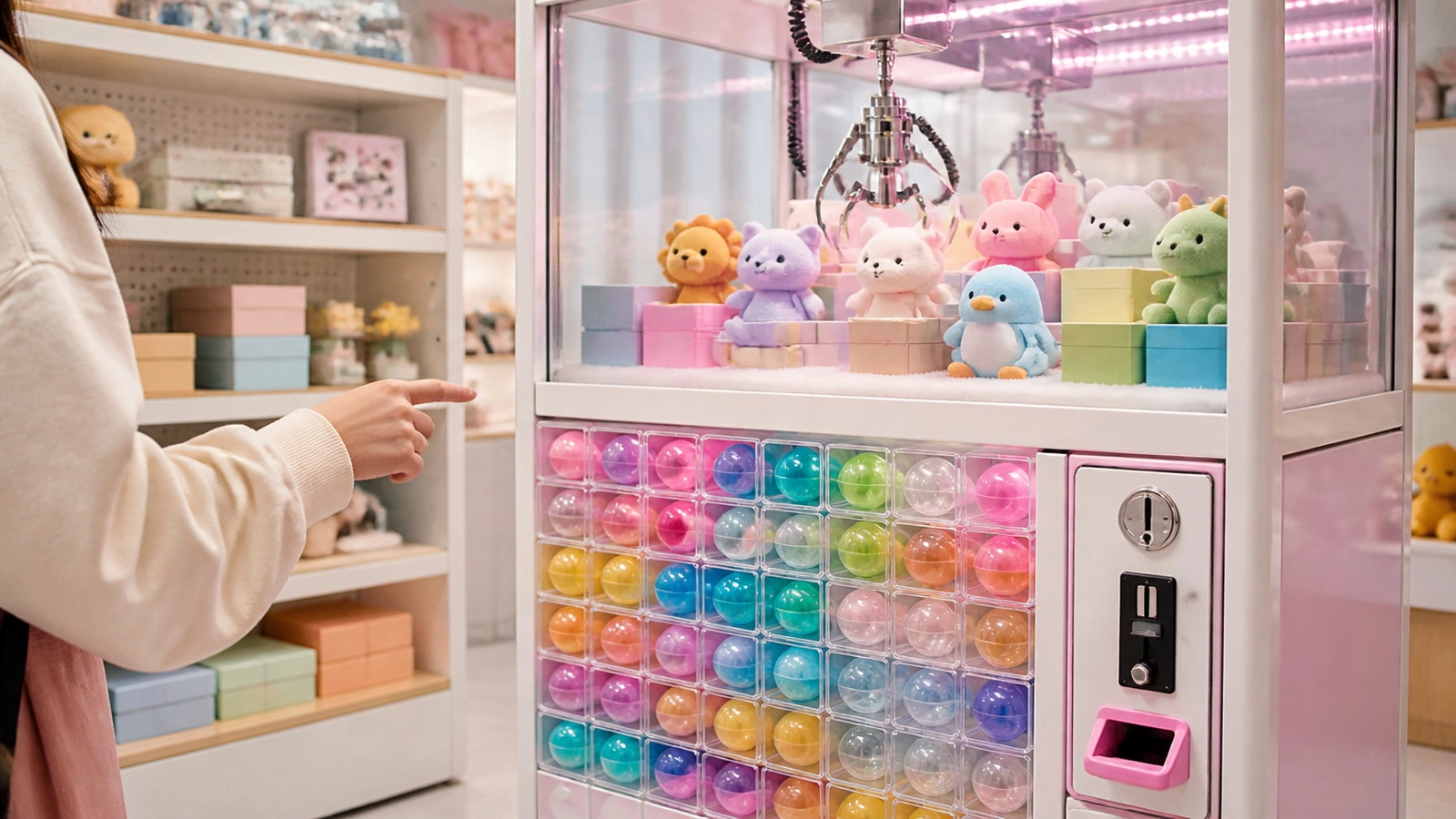
Capsule and Blind Box Claw Machines: Custom Grid Layouts, Prize Modules and OEM Production Planning
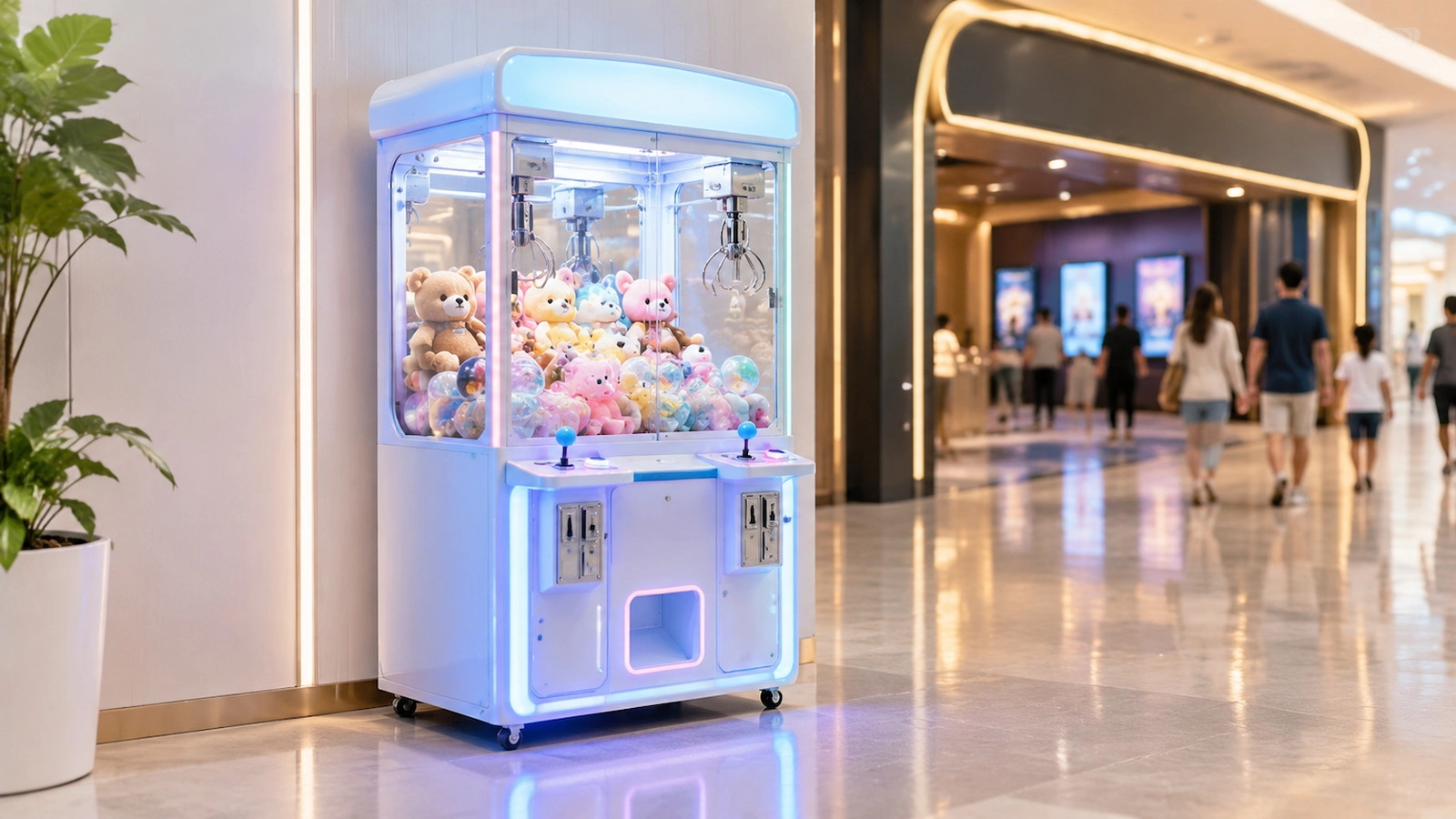
Mini Claw Machine Placement: Turning Dead Space into Daily Revenue in FECs, Cinemas and Retail Stores
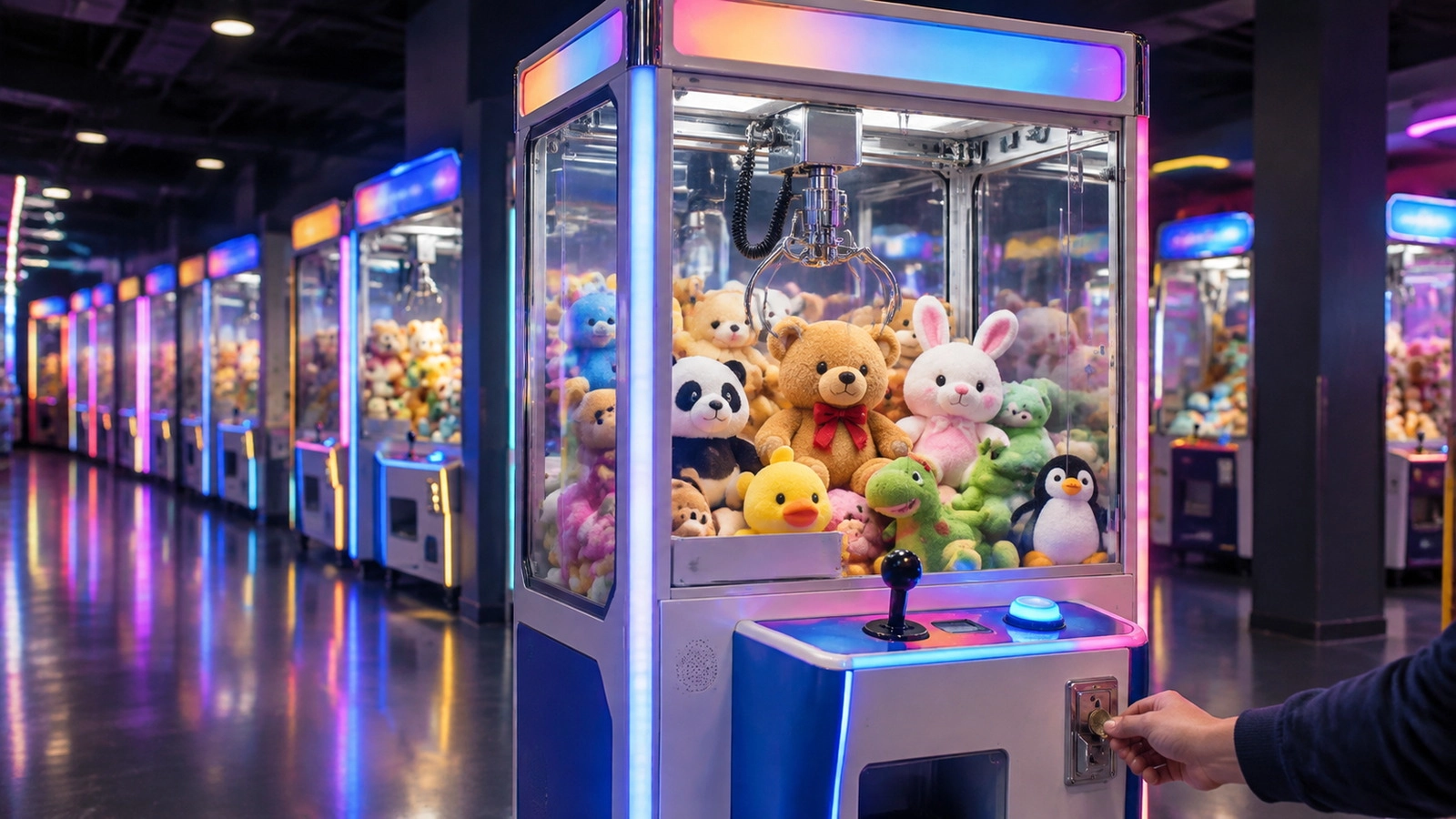
Single Claw Crane Machine Buying Guide: Cabinet Specs, Claw Assemblies and Inspection Points
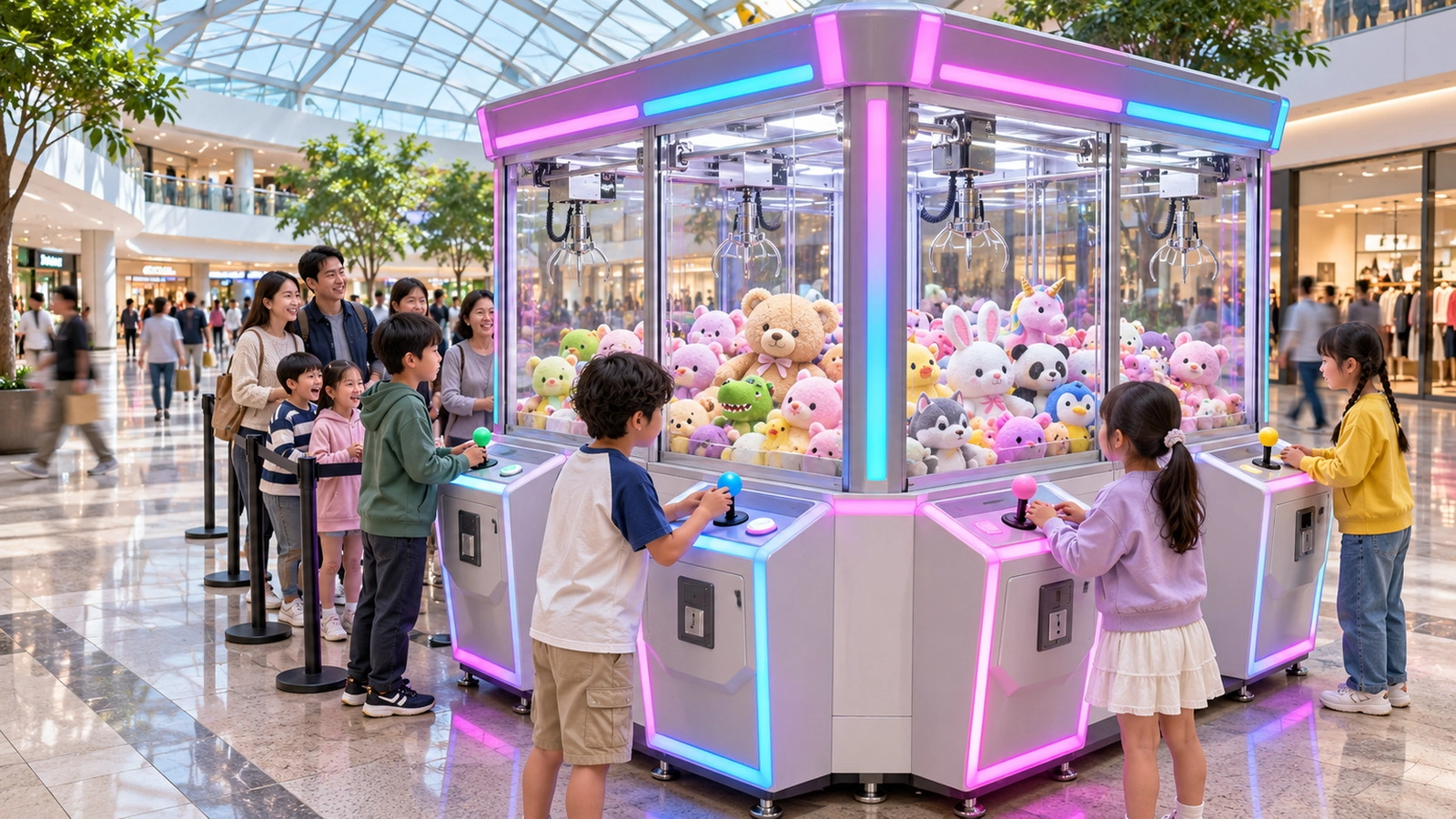
Operating a 4-Player Claw Machine: Throughput, Queue Flow and Prize Replenishment
claw machine
Do you provide after-sales support?
Yes. As a professional claw arcade machine supplier, we provide full after-sales service, including:
- Technical support
- Spare parts supply
- Installation guidance
- Maintenance assistance
Our support team ensures your claw machines operate smoothly.
What types of claw machines do you offer?
We offer a wide range of claw arcade machines, including:
- Standard claw machines
- Mini claw machines
- Giant claw machines
- Capsule claw machines
- Custom claw machines
- Prize vending claw machines
All machines are designed for arcade venues and commercial use.
How profitable is a claw machine business?
The claw machine business is one of the most profitable arcade businesses.
Many operators place claw machines in:
- Shopping malls
- Game arcades
- cinemas
- amusement parks
- family entertainment centers
With the right location and prizes, claw machines can generate stable daily income.
Do you sell claw machines wholesale?
Yes. Marwey specializes in claw machine wholesale and global distribution.
Our machines are widely used by:
- Arcade centers
- Family entertainment centers
- Amusement parks
- Game distributors
- Claw machine arcade businesses
We support bulk orders and long-term distributor cooperation.
What is a claw machine?
A claw machine is an arcade game where players control a mechanical claw to grab prizes such as toys, plush dolls, or capsules. Claw arcade machines are commonly found in arcades, shopping malls, and family entertainment centers.
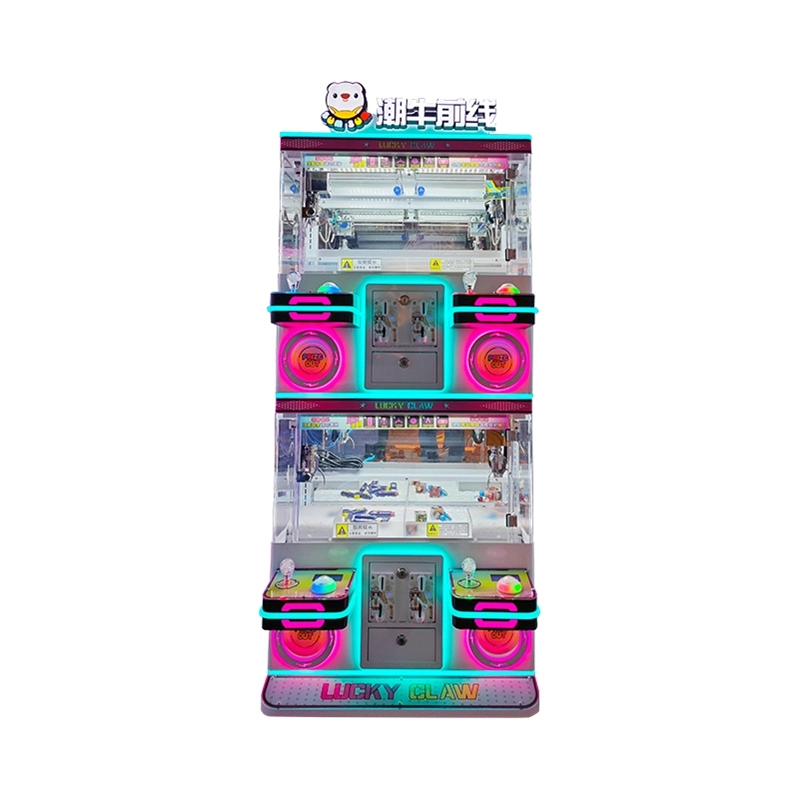
Mini 4 Players Commercial Arcade Claw Machine Coin Operated Plush Toy Prize Catcher Doll Game Machine
Discover the commercial 4-player coin-operated claw crane machine, perfect for arcades. This claw machine arcade offers thrilling prize-catching fun with plush toys, boosting engagement and revenue. Durable and easy to operate, it’s a top choice for claw crane machine entertainment.
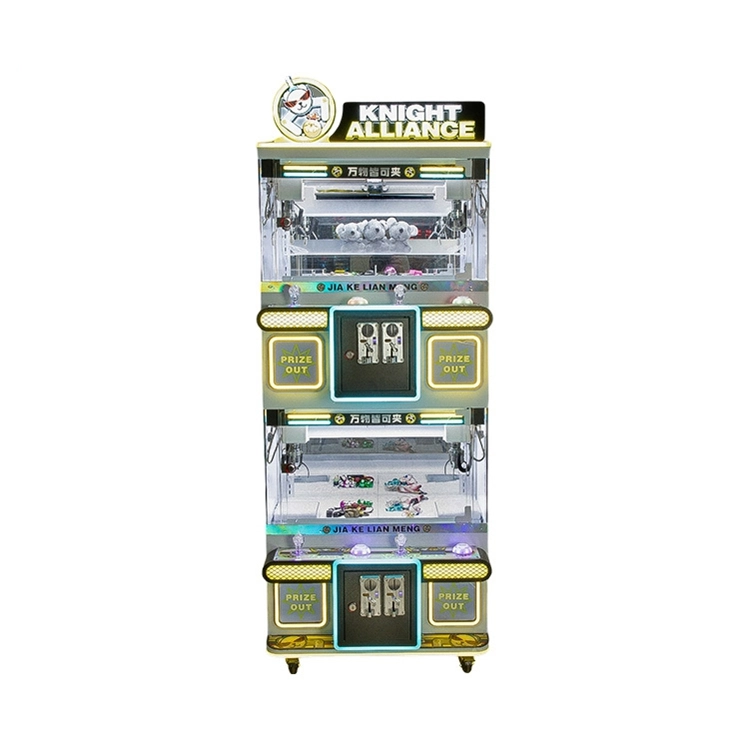
4-Player Mini Claw Crane Arcade Machine Gift Doll Catching Machine for Sale
Discover the 4-player catch doll machine, a mini claw crane prize machine perfect for fun and gifting. This claw game machine offers exciting multiplayer action, making it ideal for entertainment venues and events. Buy now for endless claw game fun!
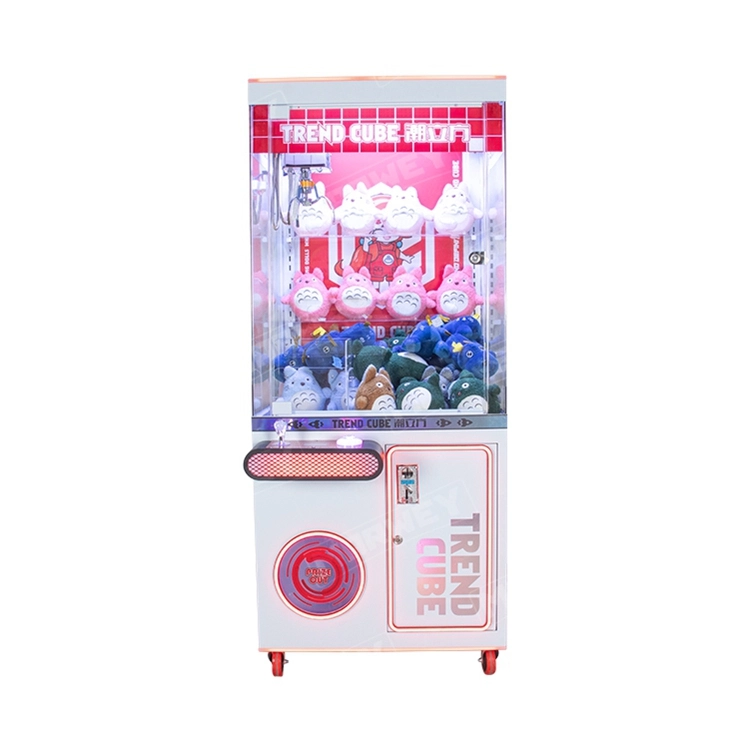
Wholesale Amusement Park Claw Machine Coin Operated Toy Crane Arcade Machine
Discover the toy crane machine, a high-quality claw machine arcade perfect for amusement parks. This coin-operated claw machine offers endless fun and excitement, making it an ideal wholesale choice for businesses seeking reliable, engaging entertainment solutions.
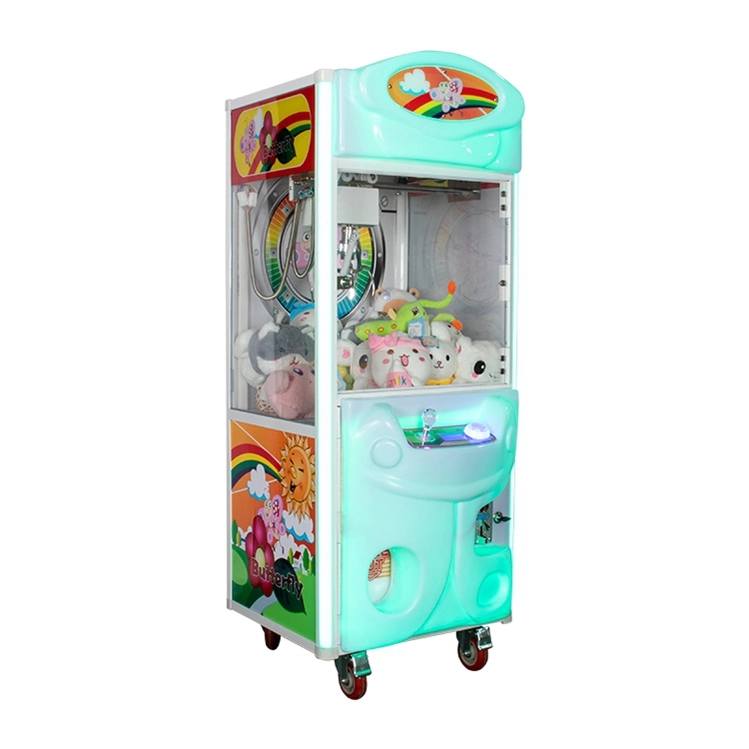
Wholesale Custom Indoor Claw Crane Machine Coin Operated Arcade Doll Catcher Machine
Discover wholesale arcade claw crane machine — customizable, indoor, and coin-operated. Perfect as a small crane claw machine, it offers endless fun and engagement. Ideal for businesses seeking a reliable small claw machine to boost customer interaction and revenue.
Marwey
MarweyArcade
marwey_arcade
Arcade Marwey
Marwey Amusement
Whatsapp: +8618922184260