Capsule and Blind Box Claw Machines: Custom Grid Layouts, Prize Modules and OEM Production Planning
Once the prize is a sealed capsule, the machine stops being a claw cabinet with different filling. This OEM guide compares capsule-grid and hybrid architectures, defines the five grid design variables that must be frozen before tooling, allocates toy safety testing responsibility, and gives a realistic 10-16 week production timeline with five pre-shipment quality gates.
- 1. Why the Prize Changes the Machine Spec
- 2. Two Prize Architectures
- Option A — Capsule Grid Only
- Option B — Claw Chamber Plus Grid (Hybrid)
- 3. Designing the Grid: The Five Variables
- 4. Testing and Labeling Requirements
- 5. OEM Production Timeline
- 6. MOQ and Tooling Economics
- 7. Quality Gates Before Shipment
- 8. Specification Checklist
- Conclusion
Capsule and blind-box formats have moved from novelty to core assortment in prize retail. The commercial reason is simple: a capsule costs less per unit than a plush of comparable perceived value, occupies a fraction of the prize chamber, and carries a reveal moment that plush does not. That reveal is what players pay for.
The engineering consequence is less obvious. Once the prize is a sealed capsule rather than a soft toy, the machine stops being a claw cabinet with a different filling. The prize handling changes: a capsule is rigid, it rolls, it cannot be squeezed into a chute, and it needs a dispenser path that a claw cannot provide. That is why capsule formats are usually hybrids — a claw chamber on top, a grid dispenser below — and why they are almost always custom projects rather than catalogue orders.
This guide covers the architecture choices, grid design variables, testing requirements and OEM production timeline for a capsule or blind-box claw machine. For the general selection framework across cabinet types, see the commercial claw machine buying guide.
1. Why the Prize Changes the Machine Spec
Compare the handling requirements of three prize types:
|
Prize Type |
Handling Characteristic |
Machine Implication |
|
Plush 20–40 cm |
Compressible, grips well, tolerant of chute geometry |
Standard claw chamber, wide chute |
|
Blind box (rigid carton) |
Square edges, poor grip, stacks predictably |
Grippier claw or magnet-free prong design, square chute |
|
Capsule (sphere) |
Rolls, cannot be gripped reliably, uniform size |
Grid dispenser module, not a claw path |
A 32 mm or 50 mm capsule cannot be picked up by a three-prong claw. Even if it could, the chute would jam within an hour. So a capsule machine either replaces the claw for the capsule portion, or it separates the two economies: claw chamber for plush and blind boxes, grid dispenser for capsules, coin-in shared across both.
2. Two Prize Architectures
Option A — Capsule Grid Only
A wall of transparent grid compartments, each holding one capsule, with a dispensing mechanism releasing the selected or randomised compartment. No claw. Players buy a reveal, not a skill attempt.
· Strength: very low prize cost per play, high margin, compact, almost no jam risk.
· Weakness: no skill element, so perceived value depends entirely on capsule contents and the visual density of the grid.
· Best for: gift shops, cinemas, retail exits, high-turnover low-ticket locations.
Option B — Claw Chamber Plus Grid (Hybrid)
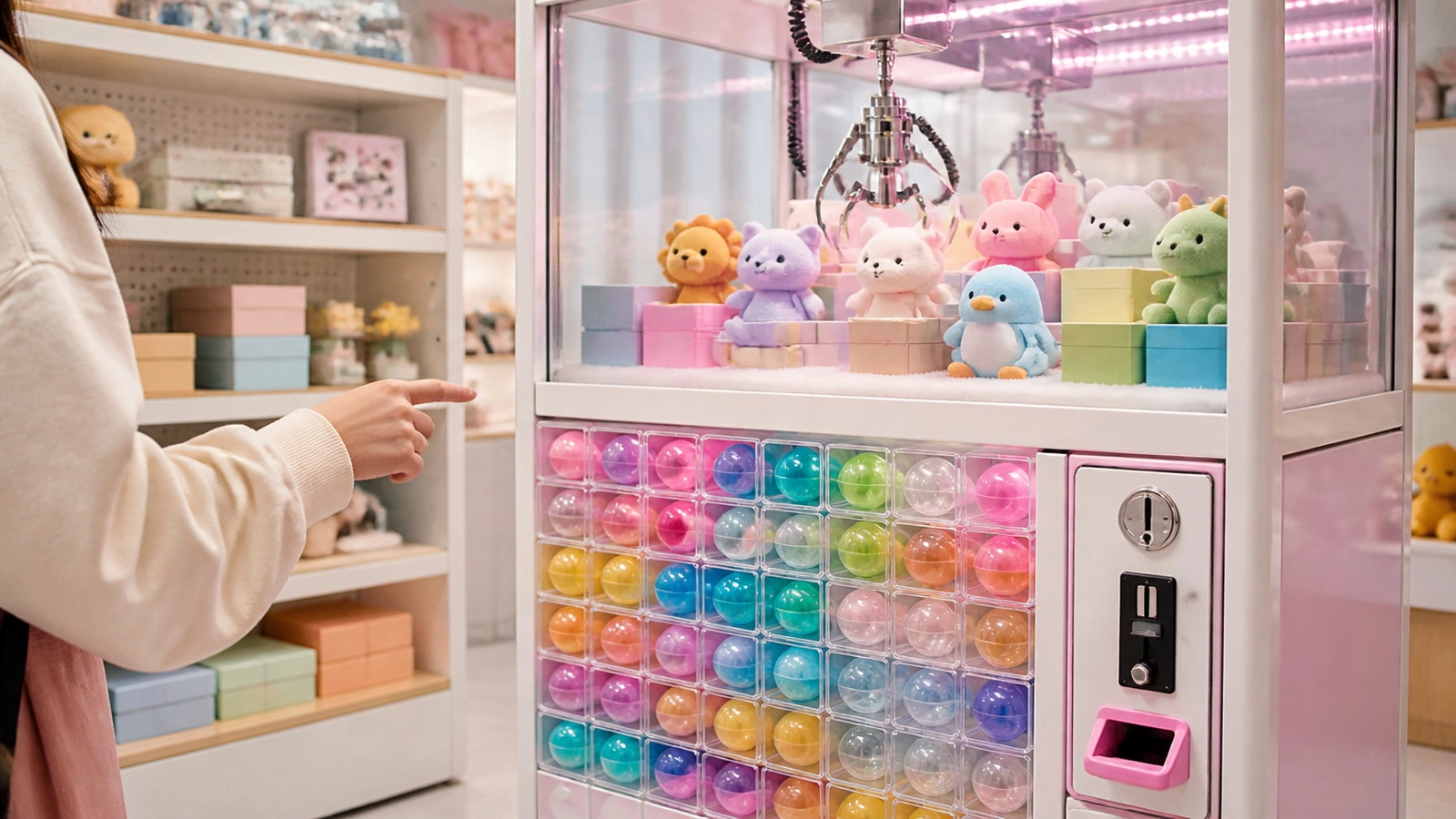
The upper chamber is a claw play for plush or blind boxes; the lower section is a capsule grid with its own dispensing lane and coin slot. Two games, one cabinet, one footprint.
· Strength: two price points and two prize economies in one asset; the claw attracts attention, the grid converts impulse.
· Weakness: more complex cabinet, two mechanisms to service, more expensive tooling.
· Best for: FECs, malls, indoor playgrounds, any venue with 3–5 minutes of dwell time.
Most OEM enquiries we receive are for Option B, because it gives the venue a hero object rather than a vending wall. A production example of the hybrid layout is the capsule grid claw machine, where a capsule wall and a prize chamber share one cabinet and one payment stack.
3. Designing the Grid: The Five Variables
A custom grid is defined by five parameters, and getting any one wrong forces a redesign of the cabinet, not just the insert.
1. Capsule diameter. 32 mm, 50 mm, 65 mm and 75 mm are the common commercial sizes. The grid cell must clear the capsule by 2–3 mm on each side; tighter causes jams, looser causes double-drops.
2. Rows and columns. Grid density drives perceived value. A 6 × 8 layout shows 48 capsules and reads as generous; a 4 × 5 layout of the same cabinet shows 20 and reads as thin. Density is a merchandising decision that must be fixed before the frame is designed.
3. Cell orientation. Vertical stack, horizontal row, or mixed matrix. Vertical columns feed by gravity and are the most reliable; horizontal rows need a pusher mechanism and add failure points.
4. Release mechanism. Gravity flap, rotary drum, or spring pusher. Gravity flap is the simplest and cheapest; rotary drum gives controlled single release and is preferred where shrinkage matters.
5. Access and restock. A front-loading grid with removable trays restocks in minutes. A grid requiring partial disassembly to refill will not be refilled on schedule, and an understocked grid looks broken.
Lock all five in a signed specification sheet before tooling begins. Changes after tooling are the most common cause of OEM schedule slippage in this category.
4. Testing and Labeling Requirements
A capsule machine sells a sealed product, which makes it a retail channel, not just an amusement device. Two requirement sets apply.
Machine requirements. Electrical safety for the destination market, correct voltage and plug configuration, and — for a coin-operated device in a public space — documented tamper resistance on the prize path. Ask for the test report for the exact model being produced, not a generic certificate.
Prize requirements. The contents of the capsule are a product in their own right. Small parts, age grading, material safety and, in many markets, labeling on the capsule itself are the buyer's responsibility and the factory's manufacturing constraint. If you intend to sell into the EU, the capsule contents will generally need toy safety testing against the applicable EN 71 series before import; in the US, the corresponding framework is ASTM F963 and CPSIA. Confirm which party holds the test report before you place a purchase order — this is the single most common gap in first-time capsule projects.
Also settle the labeling surface early. If your market requires a warning or an age mark on each capsule, that print area has to exist in the capsule tooling, and retrofitting it means a new mould.
5. OEM Production Timeline
A capsule hybrid is a custom build. A realistic schedule from specification sign-off to container loading:
|
Stage |
Duration |
What Must Be Frozen |
|
Concept and layout drawing |
1–2 weeks |
Grid density, chamber split, footprint |
|
3D rendering and artwork |
1 week |
Panel graphics, colour, branding position |
|
Structural and mechanism design |
2–3 weeks |
Dispenser type, cell geometry, chute path |
|
Sample build (T1) |
2–3 weeks |
Component sourcing |
|
Sample review and revision (T2) |
1–2 weeks |
Any change requests |
|
Tooling and moulds |
2–4 weeks |
Capsule and grid inserts |
|
Mass production |
3–4 weeks |
BOM lock |
|
Pre-shipment inspection |
3–5 days |
QA checklist sign-off |
|
Packing and loading |
1 week |
Crate design |
A 10–16 week window is normal for a first custom build. Repeat orders on an unchanged design typically run 4–6 weeks. Plan launch dates against the longer figure; the industry's most common failure is a venue opening date set against a repeat-order timeline.
6. MOQ and Tooling Economics
Custom capsule formats carry tooling: grid inserts, capsule moulds, and often new cabinet panels. Tooling is a fixed cost that has to be amortised over the order.
Practical guidance:
· First order: expect a higher effective unit price because tooling sits on a small quantity. Ask for the tooling cost as a separate line so you can see what you are amortising.
· Tooling ownership: confirm in writing that the moulds are yours, and under what conditions the factory may reuse them for other customers. This matters if you plan to reorder elsewhere.
· Volume breakpoints: typically at the container-load level. Ask for pricing at three quantities so you can see where the breakpoints sit rather than negotiating a single number.
· Mixed orders: if you want several grid configurations, order them in one production run to share setup cost.
For the underlying commercial comparison between custom and catalogue approaches, see OEM vs ODM claw machines and the customisation options overview.
7. Quality Gates Before Shipment
Five gates, each with a pass/fail record:
6. Incoming component check. Capsule diameter against the cell tolerance; reject any lot that varies more than 0.5 mm.
7. Grid release test. 100 consecutive releases per column. Zero jams, zero double-drops.
8. Claw chamber test. Full travel, full lift at rated prize weight, 50 consecutive plays at production probability.
9. Electrical and safety test. Earth continuity, voltage label, plug type, door interlocks, lock function on the prize path.
10. Cosmetic and packing check. Panel alignment, LED uniformity, crate labelling, accessory list.
Require video evidence of gates 2 and 3 on the actual serial numbers being shipped. A generic factory video is not evidence.
8. Specification Checklist
✔ Grid density and capsule diameter fixed in a signed drawing.
✔ Cell clearance tolerance specified at ±0.5 mm.
✔ Release mechanism type confirmed, with jam rate test criteria.
✔ Tooling ownership and reuse rights stated in writing.
✔ Toy safety testing responsibility allocated before PO.
✔ Capsule label print area designed into the tooling.
✔ Three-quantity pricing requested to expose breakpoints.
✔ Spare grid inserts and release mechanisms included in the order.
Conclusion
A capsule or blind-box claw machine is a retail product wrapped in an amusement device. The engineering work is concentrated in the grid: density, cell geometry, release mechanism and restock access. The commercial work is concentrated in the prize: testing responsibility, labeling and cost per reveal.
Freeze the specification before tooling, allocate the toy safety work before the purchase order, and plan the launch against a first-build timeline rather than a repeat-order one. Do that, and the format delivers what it promises — a lower prize cost per play with a higher perceived value than plush, in a footprint that fits a gift shop as easily as an FEC.
Capsule and Blind Box Claw Machines: Custom Grid Layouts, Prize Modules and OEM Production Planning
Mini Claw Machine Placement: Turning Dead Space into Daily Revenue in FECs, Cinemas and Retail Stores
Single Claw Crane Machine Buying Guide: Cabinet Specs, Claw Assemblies and Inspection Points
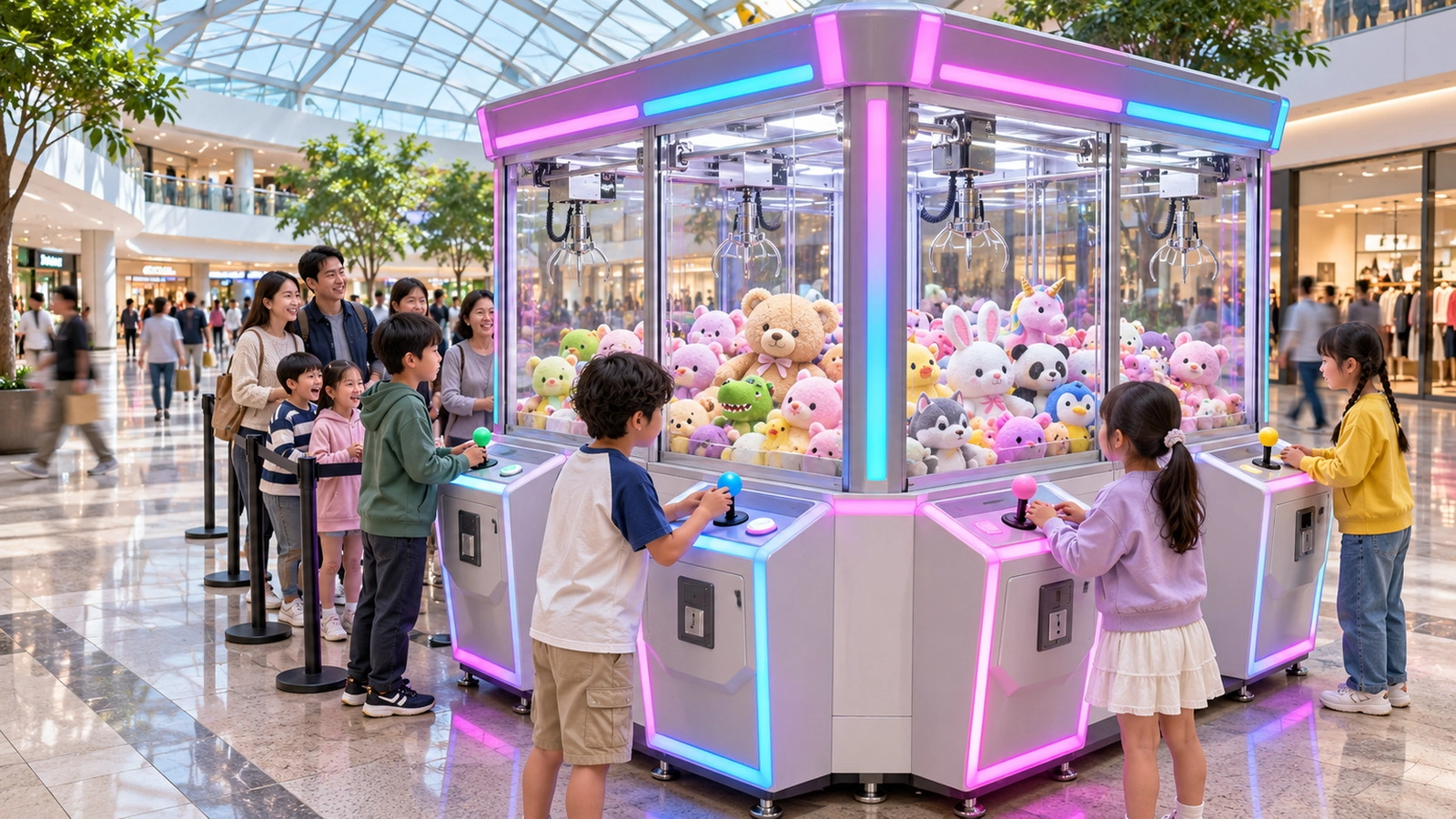
Operating a 4-Player Claw Machine: Throughput, Queue Flow and Prize Replenishment
claw machine
What types of claw machines do you offer?
We offer a wide range of claw arcade machines, including:
- Standard claw machines
- Mini claw machines
- Giant claw machines
- Capsule claw machines
- Custom claw machines
- Prize vending claw machines
All machines are designed for arcade venues and commercial use.
What is a claw machine?
A claw machine is an arcade game where players control a mechanical claw to grab prizes such as toys, plush dolls, or capsules. Claw arcade machines are commonly found in arcades, shopping malls, and family entertainment centers.
Do you provide after-sales support?
Yes. As a professional claw arcade machine supplier, we provide full after-sales service, including:
- Technical support
- Spare parts supply
- Installation guidance
- Maintenance assistance
Our support team ensures your claw machines operate smoothly.
Do you sell claw machines wholesale?
Yes. Marwey specializes in claw machine wholesale and global distribution.
Our machines are widely used by:
- Arcade centers
- Family entertainment centers
- Amusement parks
- Game distributors
- Claw machine arcade businesses
We support bulk orders and long-term distributor cooperation.
How profitable is a claw machine business?
The claw machine business is one of the most profitable arcade businesses.
Many operators place claw machines in:
- Shopping malls
- Game arcades
- cinemas
- amusement parks
- family entertainment centers
With the right location and prizes, claw machines can generate stable daily income.
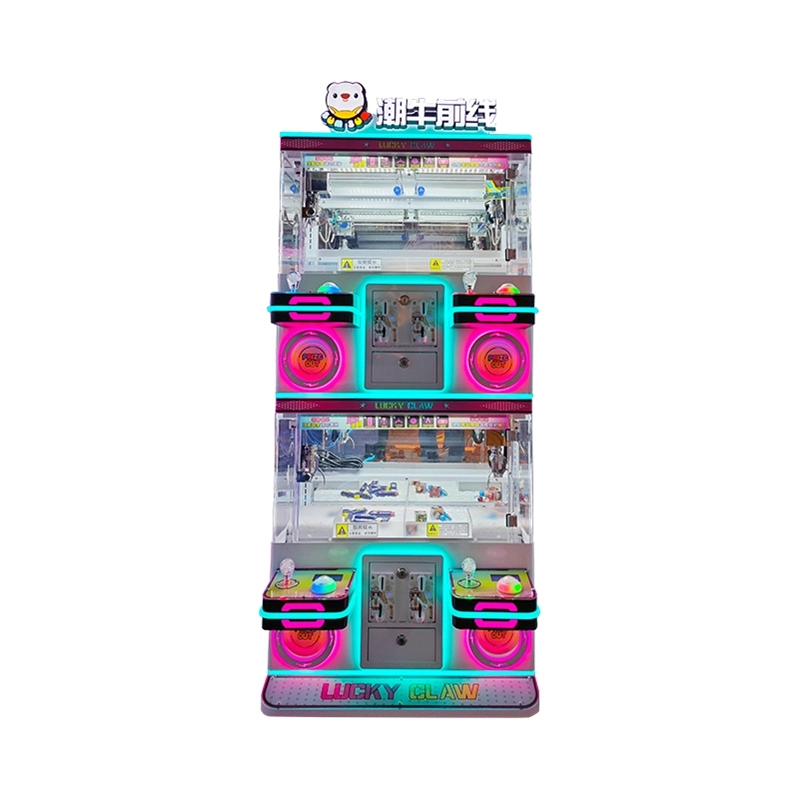
Mini 4 Players Commercial Arcade Claw Machine Coin Operated Plush Toy Prize Catcher Doll Game Machine
Discover the commercial 4-player coin-operated claw crane machine, perfect for arcades. This claw machine arcade offers thrilling prize-catching fun with plush toys, boosting engagement and revenue. Durable and easy to operate, it’s a top choice for claw crane machine entertainment.
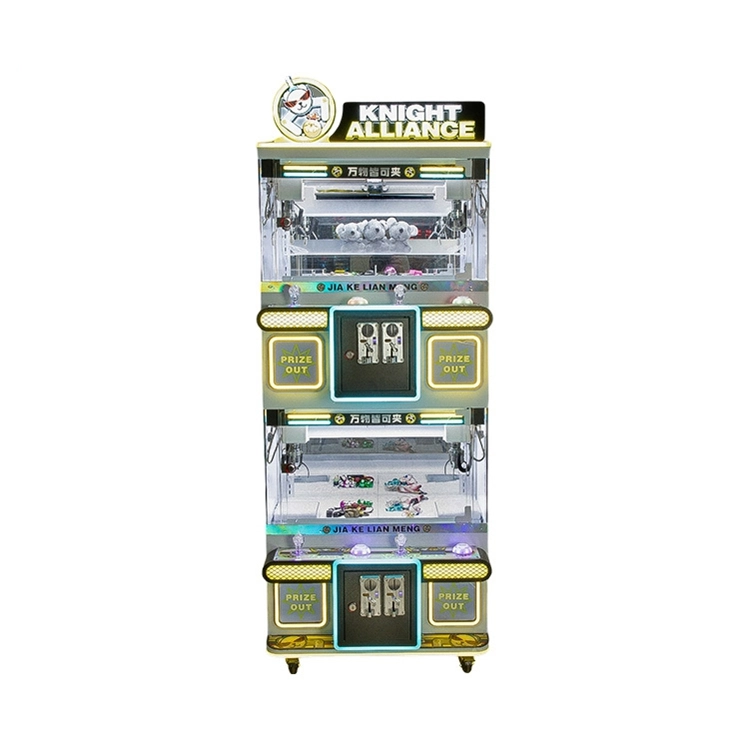
4-Player Mini Claw Crane Arcade Machine Gift Doll Catching Machine for Sale
Discover the 4-player catch doll machine, a mini claw crane prize machine perfect for fun and gifting. This claw game machine offers exciting multiplayer action, making it ideal for entertainment venues and events. Buy now for endless claw game fun!
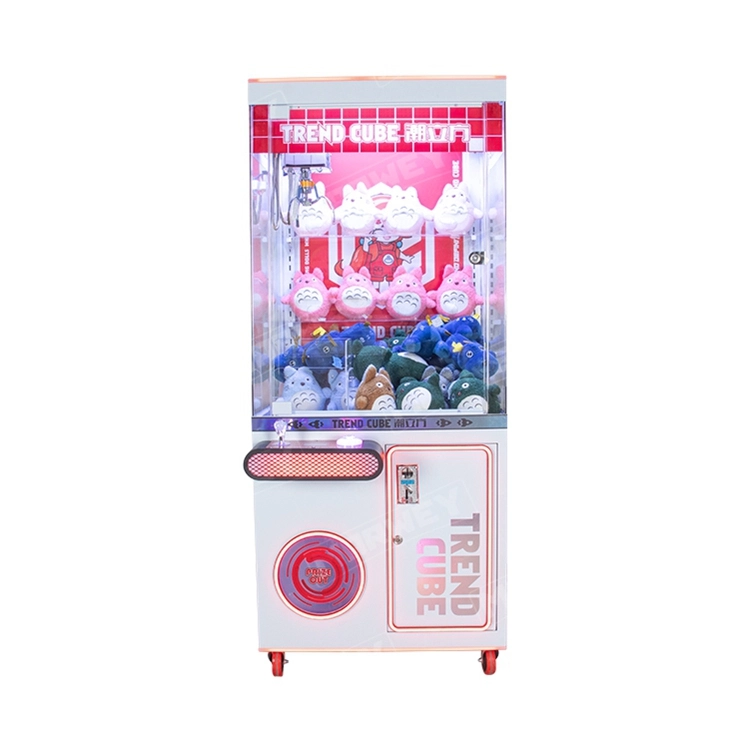
Wholesale Amusement Park Claw Machine Coin Operated Toy Crane Arcade Machine
Discover the toy crane machine, a high-quality claw machine arcade perfect for amusement parks. This coin-operated claw machine offers endless fun and excitement, making it an ideal wholesale choice for businesses seeking reliable, engaging entertainment solutions.
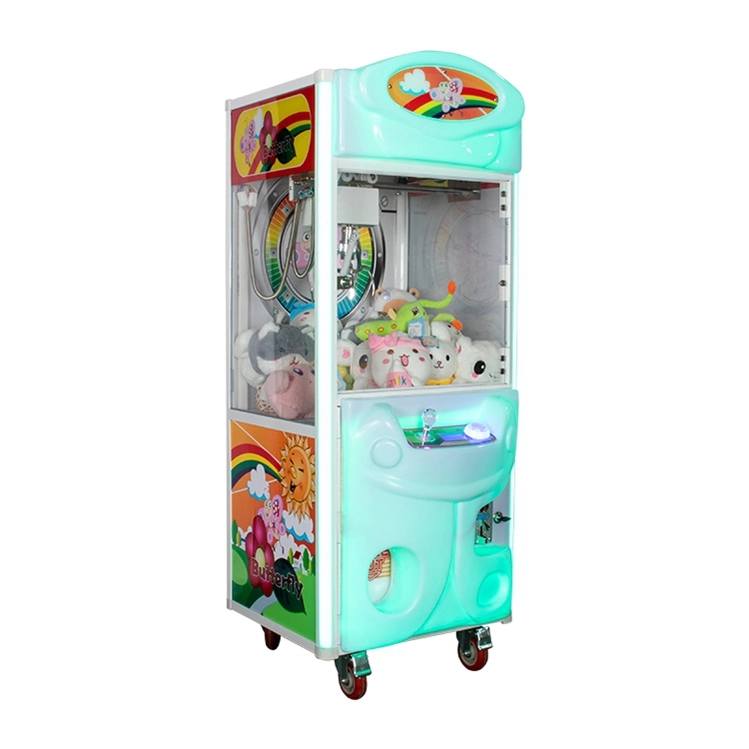
Wholesale Custom Indoor Claw Crane Machine Coin Operated Arcade Doll Catcher Machine
Discover wholesale arcade claw crane machine — customizable, indoor, and coin-operated. Perfect as a small crane claw machine, it offers endless fun and engagement. Ideal for businesses seeking a reliable small claw machine to boost customer interaction and revenue.
Marwey
MarweyArcade
marwey_arcade
Arcade Marwey
Marwey Amusement
Whatsapp: +8618922184260